
Clearing Land Without Stripping the Soil
Forestry Mulching in Longview and across East Texas for properties overrun by underbrush and invasive vegetation
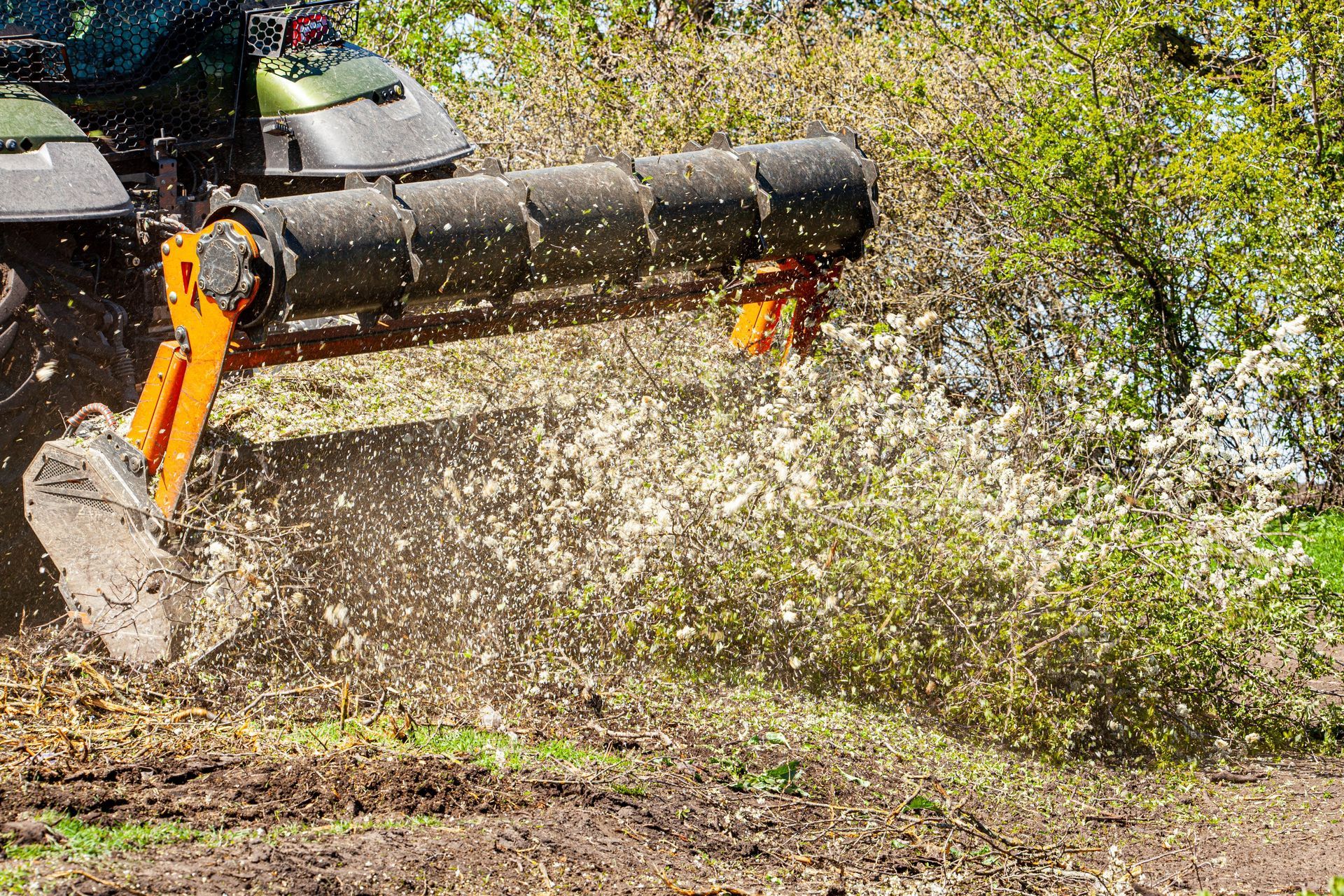
When thick underbrush blocks access to large portions of your property and invasive vegetation spreads unchecked, forestry mulching cuts through overgrowth while grinding it into organic material that settles back into the soil. SemperFi Land Clearing handles forestry mulching across residential, agricultural, recreational, and commercial properties in Longview, Tyler, Marshall, and surrounding areas where fast-growing vegetation reclaims cleared areas within a single growing season if not properly managed. You see immediate improvements in visibility and access once saplings, brush, and tangled vines are processed into a layer of mulch that decomposes naturally.
Forestry mulching removes underbrush, saplings, and invasive plants using specialized equipment that grinds vegetation on-site rather than hauling debris away or burning it. The process leaves root systems undisturbed, preventing the soil erosion that follows bulldozing or grading, and the mulch layer holds moisture while suppressing new weed growth. In East Texas, where humidity and rainfall encourage rapid regrowth, the organic barrier created by mulching slows the return of unwanted vegetation more effectively than cutting alone.
Request a property evaluation to identify which areas benefit most from mulching and which require additional clearing methods.
How Mulching Changes Property Usability
The mulching equipment processes everything from small brush to saplings several inches in diameter, leaving behind a consistent layer of shredded material instead of slash piles or exposed soil. Properties with heavy underbrush become navigable on foot or by vehicle once the vegetation is ground down, and the mulch layer stabilizes the ground surface without creating ruts or compaction zones. You notice clearer property lines, improved sight lines from roads or structures, and easier access to fence lines, water features, or back acreage that was previously unusable.
After mulching, the property surface remains level and the existing topsoil stays in place, unlike tracked equipment that scrapes away organic matter and exposes clay or hardpan. The mulch decomposes over the following months, adding organic material back into the soil rather than depleting it. SemperFi Land Clearing positions this service as environmentally responsible vegetation management because it avoids the erosion, runoff, and habitat disruption caused by traditional clearing that removes all plant material and disturbs the ground surface.
Forestry mulching works for properties preparing for fencing, livestock rotation, recreational trails, or simply improving overall land appearance and functionality. The process does not eliminate established trees or remove root systems, so properties retain soil structure and existing drainage patterns while gaining usable space and reduced fire risk from dense undergrowth.
Questions Property Owners Ask Before Mulching
Landowners in Longview and neighboring communities often ask about timing, what the process removes, and how long results last before regrowth begins.
What types of vegetation does forestry mulching remove?
Mulching processes underbrush, saplings up to several inches in diameter, vines, and invasive species, but it does not remove large established trees or root systems that remain anchored in the soil.
How does mulching differ from bulldozing or cutting?
Mulching grinds vegetation into organic material on-site without disturbing the soil surface or root structure, while bulldozing scrapes away topsoil and cutting leaves debris piles that require hauling or burning.
When is the best time to mulch overgrown property in East Texas?
Late fall through early spring offers ideal conditions because vegetation is dormant, ground moisture is lower, and equipment causes less rutting, though mulching is possible year-round depending on soil conditions.
What happens to the mulch left on the property?
The shredded material decomposes over several months, returning organic matter to the soil while suppressing weed growth and reducing erosion during rainstorms common in Longview.
How long before vegetation regrows after mulching?
The mulch layer slows regrowth for several months to over a year depending on thickness and local rainfall, but properties may need follow-up maintenance if invasive species attempt to re-establish from nearby seed sources.
SemperFi Land Clearing evaluates property conditions before mulching to determine the right approach for vegetation density, terrain, and intended use. Schedule a property assessment to review clearing options and develop a plan that improves usability without compromising soil health.